

How Public Funding Works in Illinois
Whether you are an individual artist, have an arts nonprofit, or own a creative business, there are public funding opportunities out there for you, including grants, loan programs, tax credits, contracts, and more. This page shares a high-level understanding about the kinds of public funding opportunities that exist in Illinois.
Come to the Help Desk to get assistance with accessing them or with any other questions you have!

What is Public Funding?
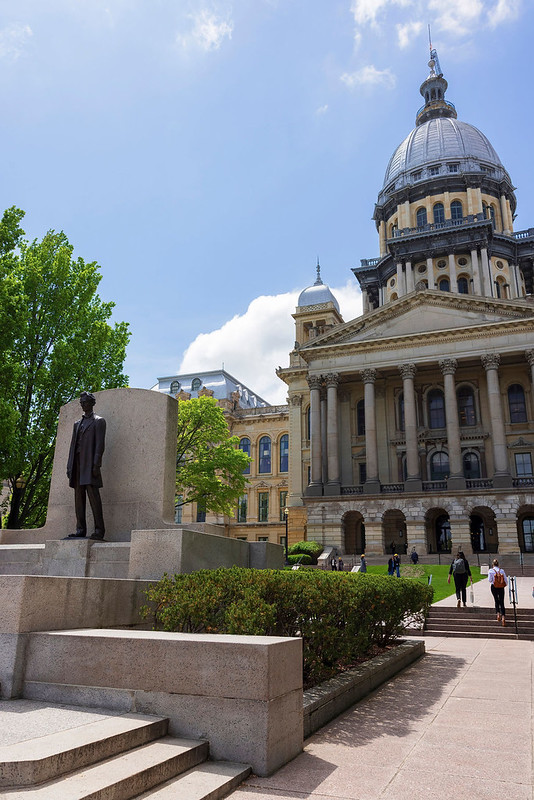
When we say “public funding opportunities,” these are essentially any programs that are funded in some way through state taxpayer dollars or federal pass-through funding. That funding can be made available in various ways, including:
- direct funding, like grants;
- discounts on expenses, like tax credits;
- lower-interest borrowing programs.
They can also be earned income opportunities, through contracting directly with a government agency or becoming a subcontractor to a contracting entity. And there are a few programs that are public/private partnerships between state agencies and foundations.
This overview provides high-level information on state-level public funding. Download this document for a deeper dive into detailed guidelines and tips. If you are looking for information on resources exclusive to Chicago, Cook County, or other Illinois metro areas, or if you need more help accessing state funding, come to the Help Desk and we’ll connect you!
Grants
The Illinois Arts Council provides grants to artists, arts educators, arts organizations, and communities. IAC does not provide grants to for-profit entities. These are direct grants – not reimbursement grants.
- To apply for an IAC grant, you need an account in their grant portal. To get started, click “Not a Member” and set up your account.
- To get help from IAC staff, you can find contact information for your regional director through the Grant Staff Locator.
- Before you apply, if you are a nonprofit, make sure you have filed your Annual Report and your nonprofit is in Good Standing with the Illinois Secretary of State’s office.
- If you are an individual, make sure you aren’t on the Illinois Stop Payment List – get rid of any state debt before you apply.
There are also grants available from other state agencies, like the Department of Commerce and Economic Opportunity, Human Services, and Public Health, for example. These agencies have funding that may include arts and culture, but are not exclusive to the sector like IAC. They fund programs that can include arts and culture-related activities.
To find out what’s available, the Illinois Catalog of State Financial Assistance is the main source for grant programs, which is updated weekly. You can browse current funding opportunities, which lists all opportunities from all agencies. You can also look at all active grant programs by agency – this can be helpful if you are not sure of the opportunity name, but you know that a certain agency runs the program.
If you have found an opportunity that you’re interested in applying for, before you actually apply, you have to be registered in the GATA (Grant Accountability and Transparency Act) portal. You also need to make sure that you are NOT on any of these lists:
- Federal Excluded Parties List, which you can verify at SAM.gov
- Illinois Stop Payment list, which is verified after you have registered in the GATA portal
- Illinois Department of Healthcare and Family Services Provider Sanctions list
And, similar to IAC, you need to make sure you are in Good Standing with the Illinois Secretary of State – this applies to businesses and nonprofit organizations.
What often comes to mind as public funding are grants – funds that are made available that you can then use and do not have to repay. This is 99.9% the case with private grants – the only requirement is often submitting reports to the funder, to share how the funds were used.
When talking about state-level grants for the arts, there are two distinctions that are important to make: grants from the Illinois Arts Council and grants from all other state agencies. Stay tuned for upcoming guides about navigating grants from specific state agencies!
Loans

Grant programs are often limited in what you can use the funding for – or you have to wait for the funds to be issued (delays can be common with government grants). To access funding more quickly, one option is to borrow money–but this can be difficult if you are looking for a smaller loan (which is often considered to be less than $100,000) or if you don’t have the credit history or status that typical lenders require.
Advantage Illinois is a state program that helps to reduce a lender’s risk when making a loan. You do not apply to Advantage Illinois–this is a program that banks and other lenders participate in. Both nonprofits and for-profits are eligible to access loans through Advantage Illinois participating lenders.
Capital Improvement Funds
It’s often difficult to find funding for capital improvement projects from public sources. However, there are three DCEO grant programs that can be used for this purpose:
- Construction and/or Renovation to Buildings, Additions, or Structures
- Site Improvements
- Land and Building Acquisition
Another source for capital improvement funding is the Illinois Finance Authority, which issues tax-exempt private activity bonds for projects that create “long-term economic value in communities throughout Illinois,” which includes much-needed capital for nonprofits to fund capital projects.
Tax Credits and Rebates

There are state programs that provide a financial benefit to tax payers, which can be in the form of tax credits or tax rebates. What’s the difference?
- Tax Credit: this is an amount that the tax law allows you to subtract from the tax that you owe. More on this below!
- Tax Rebates: these are payments the government makes to you after a tax period, where the taxing authority gives back a portion of the money that you have already paid.
For the creative sector, most of the tax benefit programs are tax credits. In general, these programs are designed to create an incentive to do business in Illinois and to employ Illinois-state residents. You don’t receive any funding up front, but you do receive a tax credit equal to a percentage of the eligible expenses, which you can use to reduce your tax liability.
Specifically for the creative sector, DCEO has two tax credit programs: the Illinois Film Production Tax Credit and the Illinois Live Theater Production Tax Credit programs. Both programs provide a tax credit – a percentage of eligible expenses – that can be used by your business, or can be revenue for your nonprofit after you sell the credits.
DCEO has other tax credit programs that, while not specifically for the creative sector, could be leveraged to support the creative economy. One example is the Illinois Angel Investment Tax Credit Program, which provides incentives to entities that make investments in businesses, which could include investment in creative businesses.
And, depending upon the location of the business, there are Federal Historic Preservation Tax Credits, Illinois Historic Preservation Tax Credits, or River Edge Historic Tax Credits that may be available for qualified rehabilitation expenses.
Contracts and Procurement
In addition to grants, loans, or other financial benefit programs, the State of Illinois can also be a source of earned income – you can sell goods or services to the state. These programs use their own systems for registration and promotion of opportunities.
The Capital Development Board’s Art-in-Architecture program either purchases or commissions works of art by Illinois artists for public buildings that are either built or renovated by the State. Each project is tied to a specific Illinois-state funded construction or renovation project, each of which has an individual solicitation, RFP, and guidelines.
For all other earned income opportunities, go to the Illinois Procurement Sites page, which provides links to all state-promoted procurement opportunities, which includes Chicago and Cook County. To be able to bid on contracts, you first need to be registered as a potential vendor with the State of Illinois. In addition to the overall procurement opportunities, there are often set-aside opportunities specifically for small businesses, businesses owned by minorities, women, and persons with disabilities, and veteran-owned businesses. Opportunities for these business ownership types can be found in Sell2Illinois.
Jump to





Support this work
If you’re a funder interested in helping the Alliance provide funding navigation services to the creative sector, we’d love to talk! Reach out to our Development Manager, Karen Loda, at loda@artsalliance.org.